How to Choose a Snow Blower: Type, Width and Power
How to choose a snow blower: match its type, width and power to your driveway and usual snowfall. A shovel suits small areas, a single-stage machine fits lighter clearing, and a two-stage model handles larger driveways and deeper snow.
On this page (10 sections)
- How do you choose a snow blower type?
- How wide should a snow blower be?
- How much power does your snow blower need?
- Which features matter for your driveway?
- Which snow blower examples fit different jobs?
- How do you match a snow blower to your driveway?
- What should you check before buying?
- How should you set up and care for a snow blower?
- What common snow blower buying mistakes should you avoid?
- How to choose a snow blower for your needs
How to choose a snow blower comes down to matching the machine type, width and power source to your driveway and typical snowfall. A cordless shovel suits small areas, a single-stage blower fits lighter clearing, and a two-stage model is better suited to larger driveways and deeper snow.
Start with the area you clear, the snow you usually get, and where you can store the machine. Then compare its width, intake height, power and handling features with those needs.
Our snow blower type guide explains the main options.
How do you choose a snow blower type?
Choose the type that fits your surface, snow depth and clearing area. A compact shovel or single-stage blower can work for small jobs, while a two-stage machine is usually a better match for larger driveways and heavier snow.
| Type | Consider it for | Check before choosing |
|---|---|---|
| Cordless snow shovel | Steps, patios, decks and short walkways | Narrow clearing path and battery runtime |
| Single-stage blower | Smaller paved areas and lighter snowfall | Intake height and surface guidance |
| Two-stage blower | Larger driveways and deeper snow | Width, weight, drive system and storage |
A snow shovel takes less storage space than a full-size machine, but its narrow path can make a driveway slow to clear. A full-size blower covers more ground per pass, though it needs more room and can take more effort to maneuver.
Read our guides to single-stage snow blowers and two-stage snow blowers if you're deciding between those designs.
How wide should a snow blower be?
Choose a width that fits the narrowest part of your route and lets you clear the whole area in a reasonable number of passes. A wide machine can cover an open driveway efficiently, but may be hard to turn or store in a tight space.
Measure your narrow gate, path, garage opening and storage area. Compare those measurements with the machine's dimensions, and leave room to turn and move it safely.
Consider the shape of the driveway as well as its total area. A short, wide driveway may suit a wider blower, while a narrow path with corners can be easier to clear with a smaller one.
Width and intake height answer different questions. Width tells you how much ground each pass covers; intake height tells you how deep a layer the machine can take in, so compare both with your route and usual snow.
Snow plows can leave a packed bank at the end of a driveway. If you regularly clear that area, make sure the machine's type and intake suit the job rather than choosing by width alone.
How much power does your snow blower need?
Choose power based on the size and weight of the job, plus how you want to supply energy. Battery machines avoid gas engine operation, while gas models run on fuel and need engine care.
With cordless machines, battery capacity and temperature can affect the work you can do before recharging. If you already own compatible batteries, check whether the blower accepts them and whether your battery setup fits the area you clear.
Gas machines can suit larger clearing jobs, but you need to plan for fuel, starting and seasonal upkeep. Compare the trade-offs in our gas vs cordless snow blower guide.
Which snow blower power source fits your routine?
Pick a power source you can manage throughout winter. Charging access, battery storage, fuel handling and engine upkeep all affect whether the machine fits your routine.
- Choose cordless if you want battery power and can keep batteries charged and stored as directed.
- Choose gas if you want fuel power and are prepared to maintain an engine.
- Choose a cordless shovel if you clear small areas and want a compact tool.
Cold weather affects batteries, so check the brand's guidance before you store or charge them. Greenworks advises keeping its battery at room temperature because cold can affect starting.
Which features matter for your driveway?
Prioritize features that fit your route, turning needs and snow placement. Controls and lights can make a machine easier to use, but a useful feature cannot make an unsuitable width or intake work for your property.
- Drive system: Self-propelled drive can help move a heavier machine. Check its speeds and controls.
- Chute adjustment: A rotating chute helps direct snow away from doors and walkways. Check how the controls work and how far the chute turns.
- Steering: Trigger-controlled steering or power steering can help with turns.
- Lights: A headlight or LED lights can help you see where you're clearing in low light.
- Storage: Check dimensions and weight against your available space and ability to move the machine.
- Surface guidance: Follow the brand's instructions for pavement, gravel and delicate surfaces.
Pay for features that solve a real problem. Chute controls matter if snow needs to go away from an entrance; a large machine may be unnecessary if you only clear a short path.
Which snow blower examples fit different jobs?
Use width, power source and machine type to narrow your choice. These four examples suit different kinds of clearing, but each still needs to fit your route, storage space and routine.
EGO SNT2416: a wide cordless two-stage option
The EGO SNT2416 suits a larger driveway when you want battery power in a two-stage design. Its 24 in clearing width, self-propelled drive and trigger-controlled steering make it a strong option when you need assisted movement across a wide route.
EGO says the machine can clear up to a 24-car driveway with 8 in of snow on one charge using the included batteries. Treat that capacity as a planning reference, since snow and route conditions affect the work required.
Choose it for a wide driveway if you want cordless power and assisted drive. Skip it if you have limited storage or want a lighter machine.
It weighs 198 lb.
VOLTASK: a cordless shovel for small areas
The VOLTASK is a compact choice for steps, patios, decks and short walkways. Its 13 in clearing path and 9.3 lb weight suit small areas where a full-size blower would be hard to store or maneuver.
VOLTASK gives a maximum runtime of 25 minutes and says the shovel can throw snow up to 20 ft. Its snow guide plates rotate 30 degrees in either direction, which helps you direct snow along a narrow path.
Choose it for short, narrow jobs and easy carrying. Skip it as your main driveway machine if its narrow clearing width would mean too many passes.
Greenworks 80V: a 20-inch cordless blower
The Greenworks 80V fits a smaller or medium clearing route when you want a full blower instead of a shovel. Its 20 in clearing path and 180-degree rotating chute suit a route where you need to direct snow without stepping up to a wider machine.
Greenworks says the blower can handle snow up to 10 in deep and throw it up to 22 ft. It includes a 2.0Ah battery; check whether that battery capacity suits the area you clear, and follow Greenworks' room-temperature storage guidance.
Choose it for a moderate route where 20 in coverage fits. Skip it if your regular clearing calls for a larger two-stage machine or you need the wider path of a 24 in model.
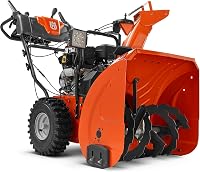
Husqvarna ST224: a two-stage gas option
The Husqvarna ST224 suits a homeowner who wants a 24 in gas-powered two-stage blower. Its power steering and push-button electric starter add useful controls to a machine built for larger driveways and paths.
It has a 212 cc engine, seven speeds and chute controls for direction and throwing height. At 201.6 lb, it needs ample room for storage and a practical way to move and turn it.
Choose it if you want a wide gas machine with power steering. Skip it if you need a lightweight tool or don't want to manage fuel and engine upkeep.
Read the owner's manual for setup and care instructions.
How do you match a snow blower to your driveway?
Match the machine to the largest area and snow depth you regularly clear. A wider two-stage blower can reduce passes on a long or broad driveway, while a smaller machine can be easier to store and turn in a tight space.
Break your route into sections: the driveway, walkways, steps and the spot where plows leave snow. One tool may clear the driveway well but be awkward on stairs or narrow paths, so plan for those areas too.
For a large property, compare your needs with our snow blowers for large driveways guide. Consider width, intake height and drive assistance together instead of letting one number decide the purchase.
What should you check before buying?
Confirm fit, capacity and seasonal upkeep before you choose. These checks help prevent buying a machine that cannot pass through your route or has nowhere practical to live.
- Measure the narrowest doorway, gate and path the machine must pass through.
- Compare its width, height and weight with your storage space and transport needs.
- Note your typical snowfall and where snow tends to accumulate.
- Check the brand's surface guidance for the areas you clear.
- For cordless models, check battery compatibility, charging and cold-weather storage instructions.
- For gas models, review the manual's fuel, starting and maintenance steps.
A brand's maximum capacity is a reference, not a guarantee for every storm. Snow texture, temperature, battery condition and driveway layout change the demands on the machine.
How should you set up and care for a snow blower?
Set up the machine according to its manual, then check the controls and route before the first snowfall. A short setup routine helps you find a storage or access problem before weather makes it urgent.
For cordless models, charge and store batteries according to the brand's instructions. Greenworks advises room-temperature battery storage; VOLTASK also recommends charging its battery in a warm, dry place and avoiding extreme temperatures.
Before clearing, move obstacles such as hoses and loose items out of the route. Plan where the chute will send snow so it does not land across a doorway, walkway or area you have already cleared.
After use, follow the manual's cleaning and storage steps. For a gas model, use the owner's instructions for fuel, starting and engine maintenance, and keep hands away from the auger and moving parts.
What common snow blower buying mistakes should you avoid?
The most common mistake is choosing by one headline number instead of checking the full route and routine. A wide clearing path cannot compensate for a machine that won't fit through a gate or into storage.
- Buying too wide: Measure gates, paths and storage openings before choosing a larger machine.
- Ignoring intake height: Compare it with the snow depth you usually clear, including buildup at the driveway entrance.
- Overestimating a battery's reach: Consider battery capacity, cold-weather storage and how much area you need to clear.
- Choosing gas without planning for upkeep: Make sure fuel and engine maintenance fit your winter routine.
- Buying a full-size blower for steps: A narrow shovel may be easier to handle in confined areas.
- Expecting one machine to suit every surface: Check the brand's surface guidance and plan how you will clear stairs and narrow paths.
If a machine seems capable but feels awkward for your route or storage space, reconsider the size or style. A good fit is one you can move, store and use through a normal winter.
How to choose a snow blower for your needs
Choose a cordless shovel for steps and small paths, a single-stage blower for lighter clearing on a smaller area, and a two-stage blower for larger driveways and deeper snow. Then compare width, power source and storage fit before deciding.
For a wide driveway where battery power and assisted movement matter, consider the EGO SNT2416. For a compact tool, consider the VOLTASK; for a 20 in cordless blower, the Greenworks; and for a wide gas option with power steering, the Husqvarna ST224.
Start with our snow blower type guide to compare designs, then see our snow blower picks if you'd like a broader shortlist.
Frequently asked questions
How do I choose the right size snow blower?
Choose a clearing width that fits the narrowest part of your route and lets you finish in a reasonable time. A narrower machine suits paths and tight storage, while a wider one can reduce passes on an open driveway.
Compare the intake height with the snow depth you usually clear, too.
Is a single-stage or two-stage snow blower better?
A single-stage blower often fits lighter snow and smaller paved areas. A two-stage machine is a better match for larger driveways and deeper snow.
Compare the model's intake height, drive system and surface guidance with your property, since stage count alone doesn't determine fit.
Should I choose a gas or cordless snow blower?
Choose cordless if you want battery power and can plan around charging, runtime and cold-weather storage. Choose gas if you prefer fuel power and are ready to care for an engine.
In either case, match the machine's clearing capacity to your driveway and usual snowfall.
Is a cordless snow shovel enough for a driveway?
A cordless snow shovel can handle steps, patios, short walks and other small areas. Its narrow path can make a full driveway slow to clear, so compare its width and runtime with the area you need to cover.
A wider blower is usually a better fit for regular driveway clearing.